ERAS
DRIVING SIGNATURE
The shape of their driving — computed from 472 laps of official timing data · vs. 2026 field.
THE FINGERPRINT
Six-axis breakdown: steering smoothness, entry aggression, tyre management, throttle application, braking, and consistency.
STEERING SMOOTHNESS PENDING — needs steering-angle data from onboard video
SETUP & STYLE
SCOUTING REPORT
How they set up the car, and the style that emerged from it.
THE REPORT
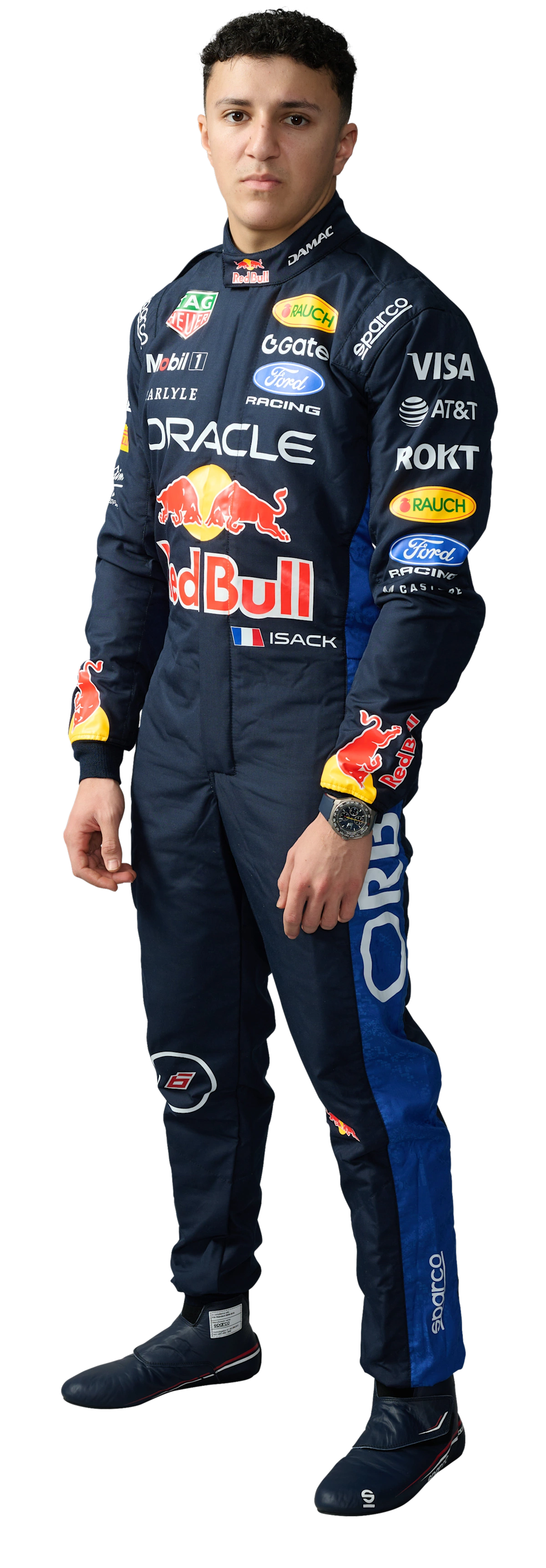
Hadjar's technical profile from junior categories is unusually clean for a driver at his experience level: his F2 2024 campaign as runner-up showed a throttle application pattern that analysts at Red Bull's junior programme described as precise at exit — he loads the rear axle with a gradient that avoids the wheelspin signature that most F2 drivers at his pace level produce. The practical consequence is better rear tyre conservation in the exit phase, where F2 drivers typically generate graining from asymmetric heat distribution. His championship loss to Bortoleto was not a pace deficit; it was a strategic variance in the final two rounds where track conditions favoured different tyre choices.
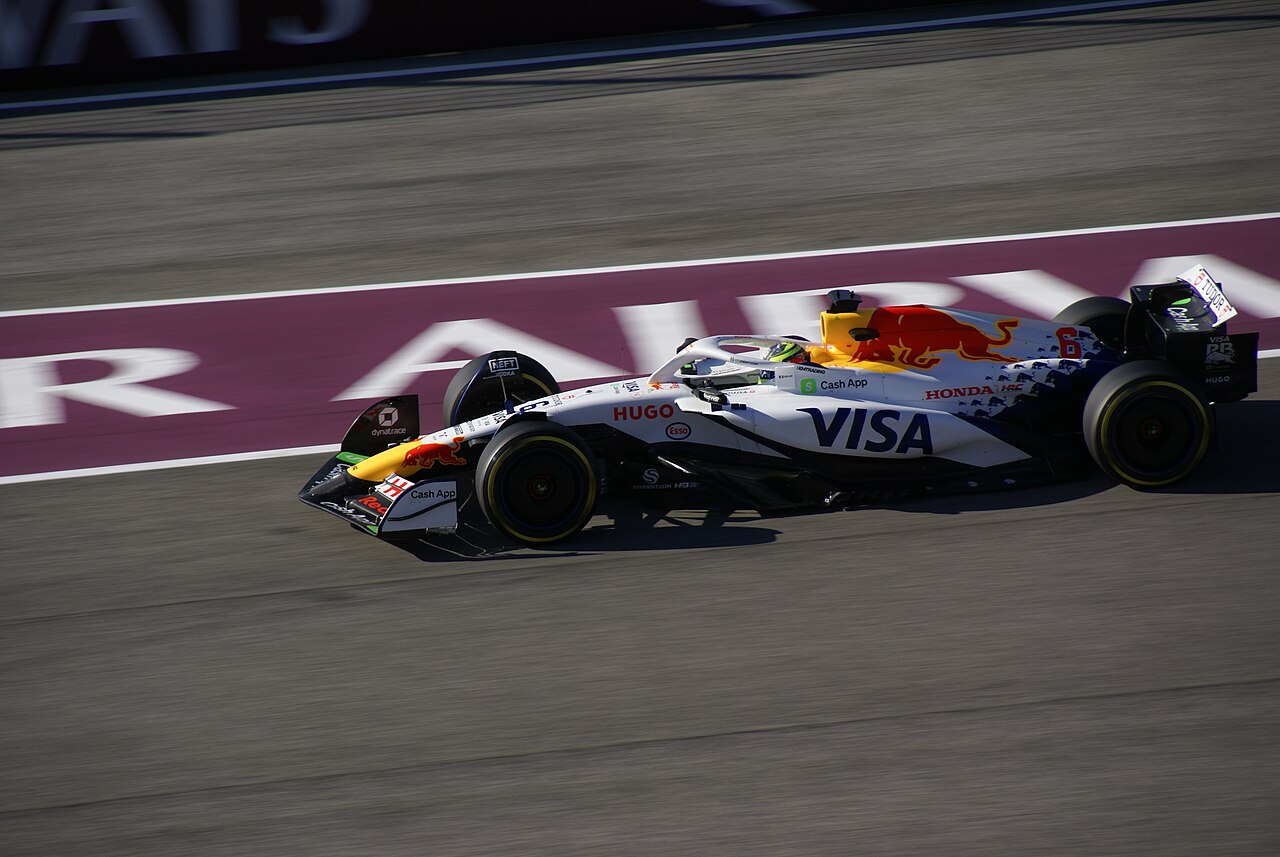
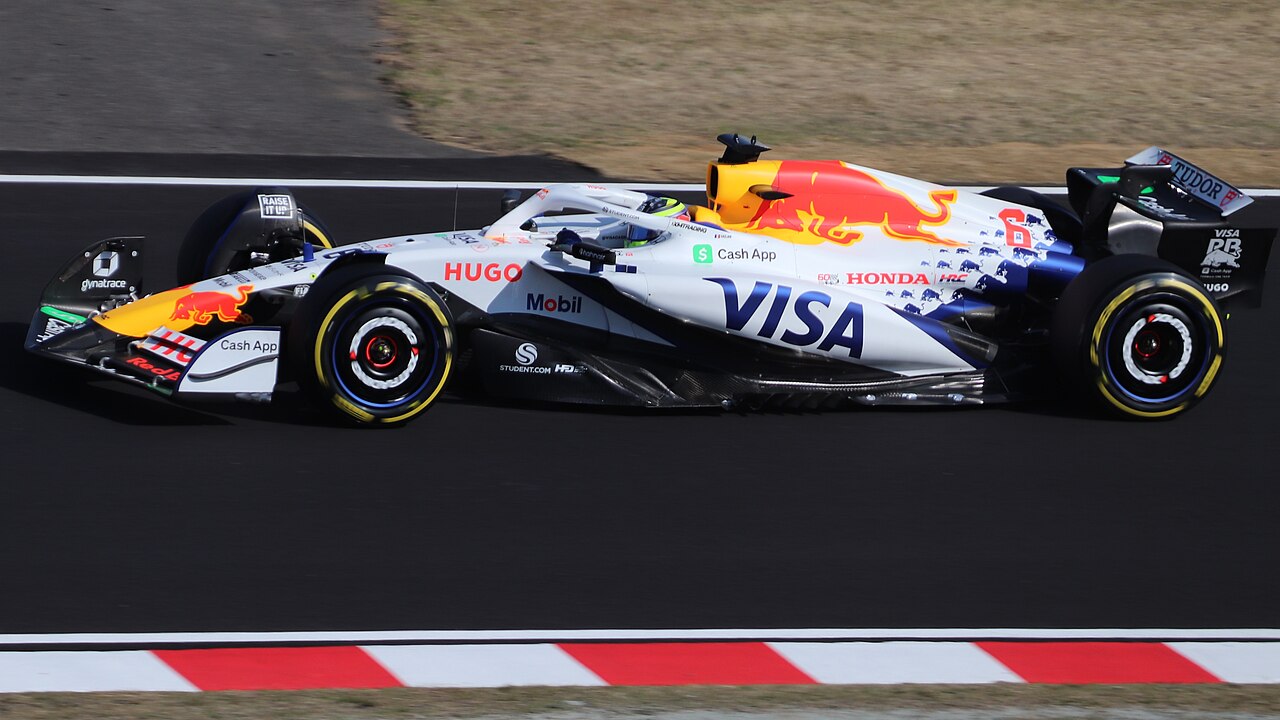
His F1 debut with Racing Bulls in 2025 showed the expected adaptation arc: early qualifying runs that underperformed his potential as he calibrated F1-level braking points, followed by more consistent lap construction from mid-season. His race data showed the specific F1 learning curve in tyre management — the compound sensitivity at F1 speeds is different from F2, requiring the driver to modulate entry aggression in real time based on compound temperature feedback rather than following a pre-calibrated reference lap.
As a second-season Racing Bulls driver in 2026, alongside Lindblad, Hadjar has the advantage of data continuity: two seasons in the same team's machinery gives him setup reference and circuit-by-circuit calibration that a rookie cannot access. If the VCARB engineering structure allows him to deploy his junior category throttle precision in the F1 exit phase — the specific technique that Red Bull's diagnostics valued — his points-scoring trajectory in 2026 should step up from his 2025 baseline. The tools are in place for that development.
SETUP PREFERENCE
MILD ROTATION
SLIGHTLY SOFT
MODERATE DOWNFORCE
EXCELLED AT
STRUGGLED WITH
MORE BELOW · TRACKS · LAPS